

 The CAC CA-25 Winjeel (aboriginal for Young Eagle) was designed and
manufactured in Australia and served with the Royal Australian Air Force as an ab-initio and advanced trainer, later as a FAC (Forward Air Control) aircraft. Although only 62 Winjeels were manufactured, they served very successfully from 1955 until 1994. A large number are still active in private ownership.
We are designing two different models of the Winjeel, one in 1/6 scale, with a wingspan of 1960mm, and the other in 1/8 scale with a span of 1450mm. Each is designed using the factory drawings as reference. The smaller version will make a great Sunday flier, while the larger one will be great for competition.
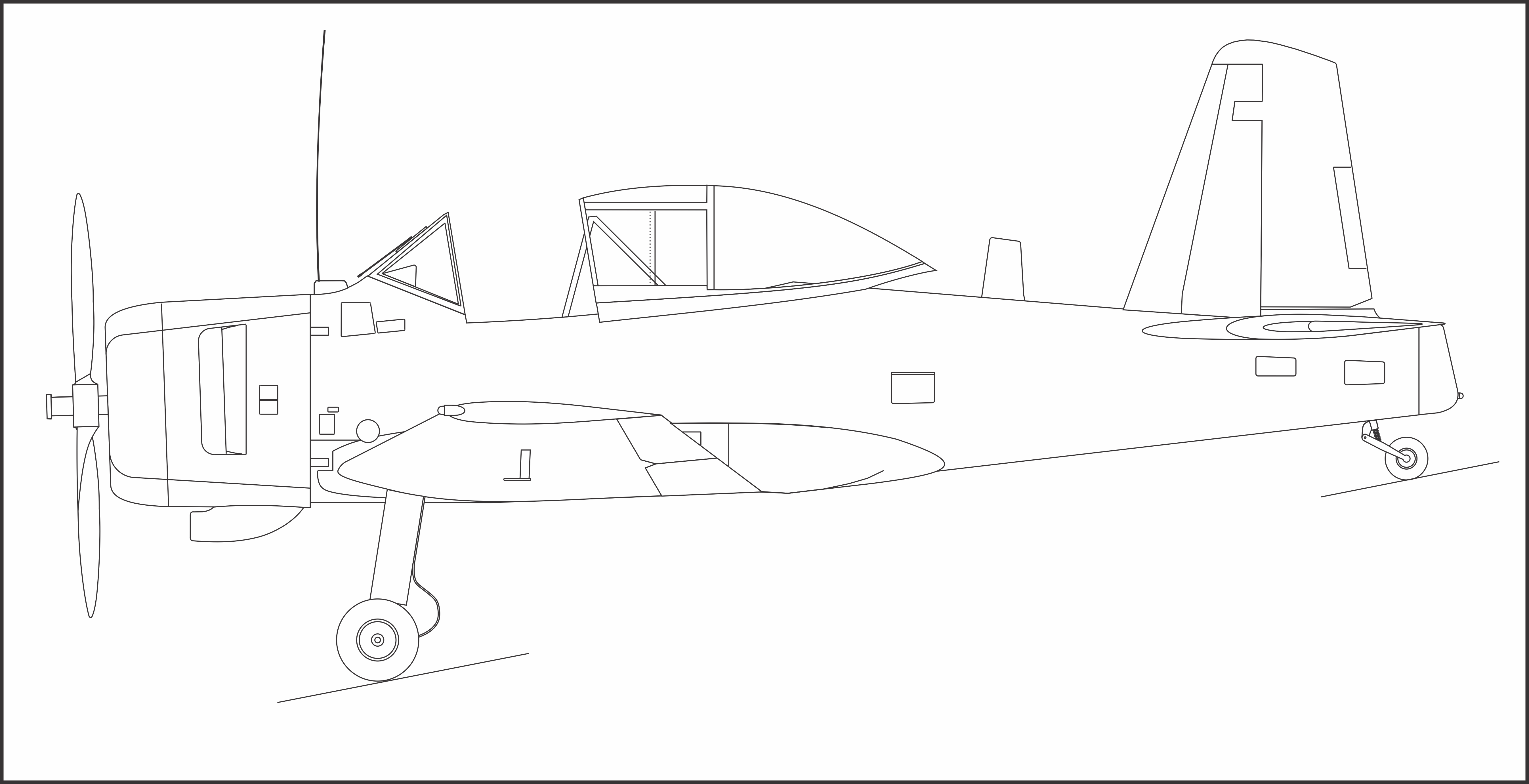
CAC CA-25 Winjeel – Design, Development, Production and Performance
The Commonwealth Aircraft Corporation (CAC) CA-25 Winjeel was Australia’s first completely indigenous post-war military training aircraft to enter large-scale production. Designed specifically for the Royal Australian Air Force (RAAF), the Winjeel (“Young Eagle”, from a Victorian Aboriginal language) replaced both the de Havilland Tiger Moth and the CAC Wirraway as the RAAF’s primary piston trainer. It served as a basic flying trainer from 1955 to 1975, followed by almost two decades in the Forward Air Control (FAC) role before its retirement in 1994.
Origins
Following the Second World War, the RAAF required a modern trainer capable of replacing two ageing aircraft:
- de Havilland DH.82 Tiger Moth (primary trainer)
- CAC CA-1 Wirraway (advanced trainer)
In 1948, the RAAF issued Technical Requirement AC.77, calling for a single aircraft capable of conducting the complete basic flying syllabus. The aircraft was required to be:
- fully aerobatic
- capable of intentional spinning
- economical to operate
- robust enough for intensive training
- easy to maintain
- suitable for Australian conditions
CAC, based at Fishermans Bend, Melbourne, responded with the CA-22 Winjeel prototype.
Development
Prototype
The first prototype flew on 3 February 1951, followed by a second later that year.
Initial flight testing revealed an unusual problem: the aircraft was too stable. While this would normally be considered desirable, it prevented students from learning spin entry and recovery, an essential part of military pilot training.
Extensive redesign followed, including:
- moving the vertical fin forward
- increasing rudder effectiveness
- redesigning the dorsal fin fillet
- modifying the engine cowling
- refining the tailplane
These changes produced an aircraft with more appropriate spin characteristics while retaining excellent general handling.
From CA-22 to CA-25
Although the prototypes carried the designation CA-22, the production aircraft became the CA-25.
Government approval for production was granted in 1953, and the first production aircraft flew on 23 February 1955. Deliveries to the RAAF commenced in September 1955.
Design Philosophy
The Winjeel was designed around five principal objectives:
- straightforward handling for ab initio students
- structural strength for repeated aerobatics
- low operating and maintenance costs
- forgiving stall characteristics
- good visibility for both instructor and student
Unlike many military trainers of its era, it was intended to complete almost the entire basic flying course without requiring transition to another piston type.
Airframe Design
Wing
The Winjeel featured a cantilever low-wing monoplane with:
- all-metal stressed-skin construction
- NACA 23015 root and NACA 23010 tip aerofoil sections
- moderate aspect ratio
- hydraulically operated split flaps
- fabric-covered control surfaces
The wing provided:
- gentle stall behaviour
- excellent roll response
- predictable aerobatic characteristics
- good low-speed handling
Its design made it particularly suitable for repetitive training sorties.
Fuselage
The fuselage used conventional semi-monocoque aluminium construction.
Features included:
- side-by-side seating
- optional third observer seat
- large sliding canopy
- excellent instructor visibility
- easily removable maintenance panels
The side-by-side arrangement encouraged close communication between instructor and student.
Cockpit
The cockpit reflected its training mission.
Equipment included:
- dual flying controls
- conventional flight instruments
- engine monitoring instruments
- VHF radio
- basic navigation equipment
The simple layout allowed students to concentrate on flying rather than managing complex systems.
Landing Gear
Unlike many military trainers of the period, the Winjeel retained a fixed tailwheel undercarriage.
Advantages included:
- lower maintenance
- reduced weight
- excellent strength
- suitability for grass and unsealed runways
- valuable tailwheel experience for military pilots
The wide-track landing gear made ground handling relatively forgiving.
Powerplant
Production aircraft were powered by a:
Pratt & Whitney R-985-AN-2 Wasp Junior
Characteristics:
- nine-cylinder air-cooled radial engine
- 445–450 hp (332–336 kW)
- Hamilton Standard constant-speed propeller
Originally, CAC intended to install its own Cicada radial engine, but development of that engine was cancelled before production, leading all CA-25s to use the Pratt & Whitney powerplant.
Structural Design
The Winjeel was engineered for the high utilisation typical of military training.
Key features included:
- all-metal primary structure
- corrosion-resistant aluminium skins
- robust wing spars
- reinforced engine mount
- easily accessible systems
The design proved exceptionally durable, with many aircraft remaining airworthy decades after retirement.
Production
Manufacturer:
Commonwealth Aircraft Corporation
Location:
Fishermans Bend, Victoria
Production timeline:
- Prototype CA-22: 1951
- Production CA-25: 1955–1957
Production totals:
- 2 CA-22 prototypes
- 62 CA-25 production aircraft
The last aircraft was delivered in 1957, with serial numbers A85-401 to A85-462.
Operational Service
The Winjeel initially served with:
- No. 1 Basic Flying Training School, Uranquinty
- later No. 1 Flying Training School, Point Cook
Students completed basic training before progressing to more advanced aircraft.
When the RAAF introduced the Macchi MB-326 jet trainer in 1968, it attempted an “all-through” jet training system. After only two courses, this concept was abandoned, and the Winjeel returned to the basic training role until it was replaced by the PAC CT/4A Airtrainer in 1975.
Forward Air Control Conversion
Rather than being retired immediately, several Winjeels were modified for the Forward Air Control (FAC) role.
Modifications included:
- smoke marker dispensers
- improved communications equipment
- military navigation equipment
Their mission was to:
- mark targets
- direct attack aircraft
- train FAC personnel
The FAC Winjeels remained in service until 1994, when they were replaced by the Pilatus PC-9.
Specifications
| Item | Specification |
|---|---|
| Crew | 2 (plus optional third seat) |
| Length | 8.92 m (29 ft 4 in) |
| Wingspan | 11.81 m (38 ft 9 in) |
| Height | 2.52 m (8 ft 3 in) |
| Wing Area | 23.2 m² (250 sq ft) |
| Empty Weight | 1,542 kg (3,400 lb) |
| Maximum Take-off Weight | 1,969 kg (4,340 lb) |
| Engine | 1 × Pratt & Whitney R-985-AN-2 Wasp Junior |
| Power | 450 hp (336 kW) |
| Propeller | Two-blade Hamilton Standard constant-speed |
Performance
| Performance | Value |
|---|---|
| Maximum Speed | 291–299 km/h (157–161 kt) |
| Cruise Speed | 253–265 km/h (137–143 kt) |
| Stall Speed | Approximately 85 km/h (46 kt, flaps down) |
| Initial Rate of Climb | 1,500 ft/min (457 m/min) |
| Service Ceiling | 15,800 ft (4,816 m) |
| Range | 883–885 km (477–478 NM) |
| Endurance | Approximately 5.5 hours |
| Take-off Distance | Approximately 350 m (typical training weight) |
Flying Characteristics
The Winjeel earned an outstanding reputation among instructors and students for its:
- stable but responsive handling
- forgiving stall characteristics
- excellent aerobatic capability
- rugged construction
- straightforward maintenance
- predictable spin recovery after the tail redesign
Its fixed tailwheel undercarriage also gave generations of RAAF pilots valuable experience in conventional-undercarriage operations before moving to more advanced aircraft.
Legacy
Although only 62 production aircraft were built, the CA-25 Winjeel became one of Australia’s most significant military aircraft. It trained thousands of RAAF, Royal Australian Navy and Australian Army pilots over two decades and continued to serve in the specialised Forward Air Control role for almost another 20 years. Many survive today in museums and private ownership, with several remaining airworthy at aviation events throughout Australia. The Winjeel’s combination of robust engineering, forgiving handling and Australian-designed practicality has secured its place as a landmark in Australia’s aviation history.